
The Dream
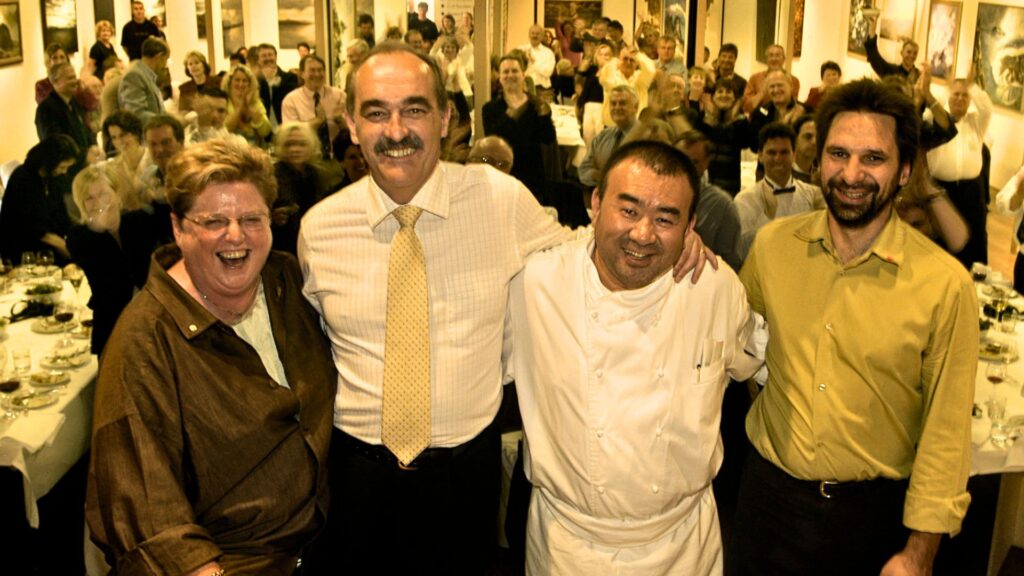
In October 1999, an ABC television studio in Nipaluna/Hobart hosted an unusual exercise in collective imagination. The program, broadcast ahead of the Tasmanian Government’s Tasmania Together consultation process, invited panellists to speak as if from the year 2020, to describe what the state had become. The audience that night had good reason for scepticism. Tasmania in the late 1990s was, in the words of one participant, “the poorest, the sickest, the dumbest state in Australia.” It was reeling from the Port Arthur massacre. Its young people were leaving. Its confidence was at its lowest ebb.
Among the panellists was a US-born futurist named Robert Theobald. Theobald was speaking in the speculative voice the program asked of all its participants: not describing Tasmania as it was in 1999, but imagining it as it might become. His imagined future Tasmania was one where “people recognise Tasmania is a leader, one of the places you look for ideas, creativity and vision.” To an audience that night, it must have sounded like fantasy. It didn’t stay that way.
Watch the 1999 ABC vision for Tasmania – link to ABC NEWS article
Also in the room that night was Jim Bacon, Tasmania’s new Labor Premier, who had staked his government on exactly that proposition. Earlier that year, Bacon had attended an opera in Hobart performed by Robyn Archer, then Artistic Director of the Adelaide Festival, the largest arts festival in the southern hemisphere. The conversations around that performance convinced him Tasmania needed an international arts festival of its own. By the time he got home that night, his wife Honey later recalled, his mind was made up.
What Bacon had in mind was ambitious by any measure. He invited Archer to a meeting and made his pitch: “I want an international festival for Tasmania and I’ve got $600,000.” Archer, who had just negotiated a single new opera for Adelaide at a cost of $700,000, understood immediately what she was being asked. “It was a very, very interesting challenge,” she later recalled. “He wanted an international festival for the budget of less than one show in the Adelaide Festival.”
The other condition Bacon set was equally challenging: the festival could not be in Hobart alone. It had to reach the north of the state. Archer, who hails from Adelaide, accepted the brief and brought her parents to Tasmania for a ten-day road trip, visiting Coles Bay, Cradle Mountain and as many smaller communities as they could cover. By the end of that journey, the festival had its name. Ten Days on the Island.
The solution Archer devised to the question of geography was elegant: rather than competing for famous names she could not afford, she would programme artists from other islands around the world, people whose stories Tasmanians could recognise and relate to. “The audience won’t be drawn to these shows because of famous names,” she explained, “but because the stories they are telling are of interest to them.” When she needed to stage Circus Oz and faced the perennial choice between Hobart and Launceston, she chose neither: she put them in Campbell Town, “smack bang in the middle.” “People came up from Hobart and down from Launceston, and from the east and the west,” she said. “The local pie and pasty shop had never had such great business.”
Tasmania’s first international arts festival opened in March 2001. Jim Bacon’s government had managed to raise $2 million in funding. The then-Governor of Tasmania, Sir Guy Green, lent his prestige as a founding figure. Robyn Archer brought her full curatorial ambition to the programme, juxtaposing local content with high-level international artists in a way that had never been attempted in Tasmania before. In the years that followed, the cultural confidence Ten Days on the Island ignited would grow into something no one had fully anticipated: new festivals, new venues, new institutions. Ten Days on the Island showed Tasmania what was possible.
Jim Bacon did not live to see what he had helped start become what it became. In February 2004, he announced he had been diagnosed with lung cancer. His final press conference was characteristically direct. Asked what he was most proud of in his time as Premier, he answered without hesitation: “To see the people of Tasmania optimistic and really confident about the future. I’ve loved every minute of it. No regrets. I’m deeply sorry I couldn’t go on longer, but that’s life.”
He died on 20 June 2004, aged 54, between the second and third festivals he had created. He saw 2001 and 2003. He did not see the record crowds, the first nation ceremony on Devonport beach, or the twenty-five years of cultural transformation that followed his backstage conversation with Robyn Archer.
Robyn Archer, looking back years later, put it simply: “Ten Days was a really great beginning and I really attribute Tasmania’s cultural success to Jim Bacon. It was splendid to be part of all that. There was certainly a magic about Ten Days on the Island, and many, many magic moments.”